
October 15, 2026
By RVR Associates | Intellectual Property Rights
Remember back in March 2025?
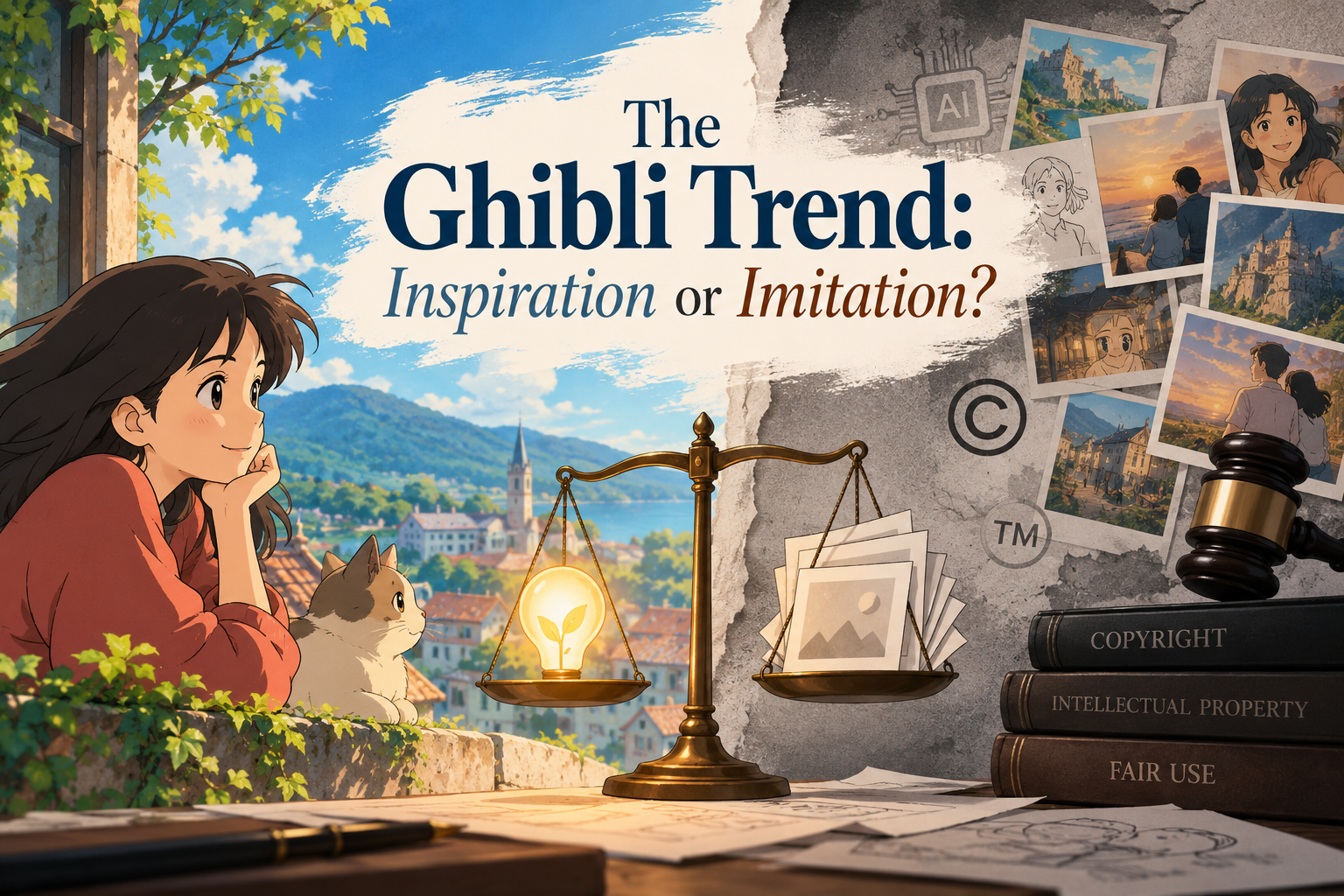
Suddenly, everyone’s photos looked like soft, dreamy scenes straight out of a Studio Ghibli movie. Whether it was family dinners, wedding pics, or brand ads, it was everywhere.
It was fun, beautiful, and took only seconds to make.
But for artists, it brought up a tricky question. If a machine can copy a style that took decades to build in just seconds, is that inspiration or is it theft?
Under Indian law, the answer is a bit more complicated than just yes or no.
Can anyone actually own a style?
Basically, no.
The Copyright Act of 1957 protects original artwork, but it covers the expression of an idea, not the style itself. The Supreme Court made that distinction clear in the 1978 R.G. Anand v. Delux Films case.
So, dreamy watercolor skies and hand-painted vibes don’t belong to any one studio, no matter how famous they are.
What the law actually protects are specific things like recognizable characters, particular scenes, or large chunks of existing work.
Same AI tool, totally different risk.
Think about two people using the same app.
Person A turns a family photo into a whimsical, hand-painted style. Since there are no famous characters or copied frames, that’s just a style choice, not really infringement.
Person B is a business. If they generate an image of a famous Ghibli character to sell something, that’s a different story—it could be copyright infringement or even a trademark issue if they use the studio’s branding.
Keep two things in mind: “The AI made it” isn’t a legal defense, and just looking similar doesn’t automatically mean it’s infringement. Every case depends on the specific facts.
The bigger picture: how AI learns.
The real debate is about what happens before you even make an image, back when AI systems learn from massive collections of artwork, often without any permission or pay.
In July 2026, the Delhi High Court weighed in on this with ANI v. OpenAI. For now, they ruled that using news content to train AI counts as fair dealing, so they didn’t block it.
But that was about news, not art, and there’s no final verdict yet.
Meanwhile, the government is looking at a system where AI developers pay royalties to creators, but that’s still just a proposal.
Bottom line: the law is still catching up.
Using AI images for your business? Ask yourself these questions first.
-
- Does the image show a recognizable character or a specific movie scene?
-
- Are you using Ghibli’s name, logo, or movie titles?
-
- Did you get permission from the people in the photos you uploaded?
-
- Do the terms for the AI tool actually allow you to use it for business?
-
- Do you even own the image? If there isn’t enough human input, you might not.
Are you an artist? Protect your work.
-
- Hold onto your sketches, drafts, and original files.
-
- Think about registering your copyright. It’s not required, but it’s great evidence to have.
-
- Make sure to check the license terms whenever you post your work, and try using AI opt-out tools. They help, but they aren’t a guarantee.
-
- See your stuff getting copied? Keep a record and ask for advice right away.
So, is it stealing?
Sometimes, legally speaking. Often, not really.
But there’s a bigger issue here. Artists spend years perfecting their craft, and AI is built on that. Figuring out how to balance new tech with the people whose creativity fuels it is a conversation that’s just getting started. Tech makes copying easier. It doesn’t make ownership, consent, and accountability go away.
Reference:
ANI Media Pvt Ltd. v. OpenAI OpCo LLC, CS (COMM) 1028/2024; 2026:DHC:5900
Author by,
RVR Attorneys Associates